
Author: Penny Marblism

  • Why Service Businesses Are Hiring AI Employees to Capture Every Opportunity

    Why Service Businesses Are Hiring AI Employees to Capture Every Opportunity

    A missed call can be more than a missed conversation.

    For a local plumber, electrician, landscaper, contractor, cleaner, HVAC company, or repair business, that call might be a customer ready to book.

    If nobody answers, the customer may move on to the next business in the search results.

    That is the problem I kept seeing with great local businesses. They were doing excellent work, but calls went to voicemail. Website inquiries sat unanswered. Follow-ups got pushed to tomorrow: and then forgotten.

    So, I just became a Marblism partner and I want to explicitly tag Marblism here as @Marblism wherever the publishing format supports social-style mentions.

    Marblism (@Marblism, where supported) offers AI employees designed to help businesses handle repetitive but important work, including calls, lead generation, inboxes, and follow-ups. It is worth a look if you run a service business and want to explore a practical way to protect more opportunities without immediately adding another full-time employee.

    Disclosure: I may receive compensation if you sign up through my partner link. I’m sharing Marblism because I believe the problem it addresses is real and common for local businesses. As with any business tool, take a look at the details and decide whether it fits your operation.

    The hidden cost of a missed call

    Most service businesses do not miss calls because they do not care.

    They miss calls because they are busy.

    The owner may be under a sink, on a roof, behind the wheel, inside a customer’s home, or handling an urgent job. The office manager may be helping another customer. The team may be closed for the evening.

    Meanwhile, the phone keeps ringing.

    The potential customer usually does not know why the call was missed. They only know that they need help. If another company answers first, that company may get the opportunity.

    This is especially important for local service businesses because many customer decisions happen quickly. Someone with a broken water heater or a lawn that needs attention may not spend the next three days waiting for a reply.

    They may call the next business.

    That is where an AI receptionist or AI employee can help. Instead of allowing every unanswered call to become a dead end, the system can help start the conversation, collect basic information, and route the next step based on how it has been set up.

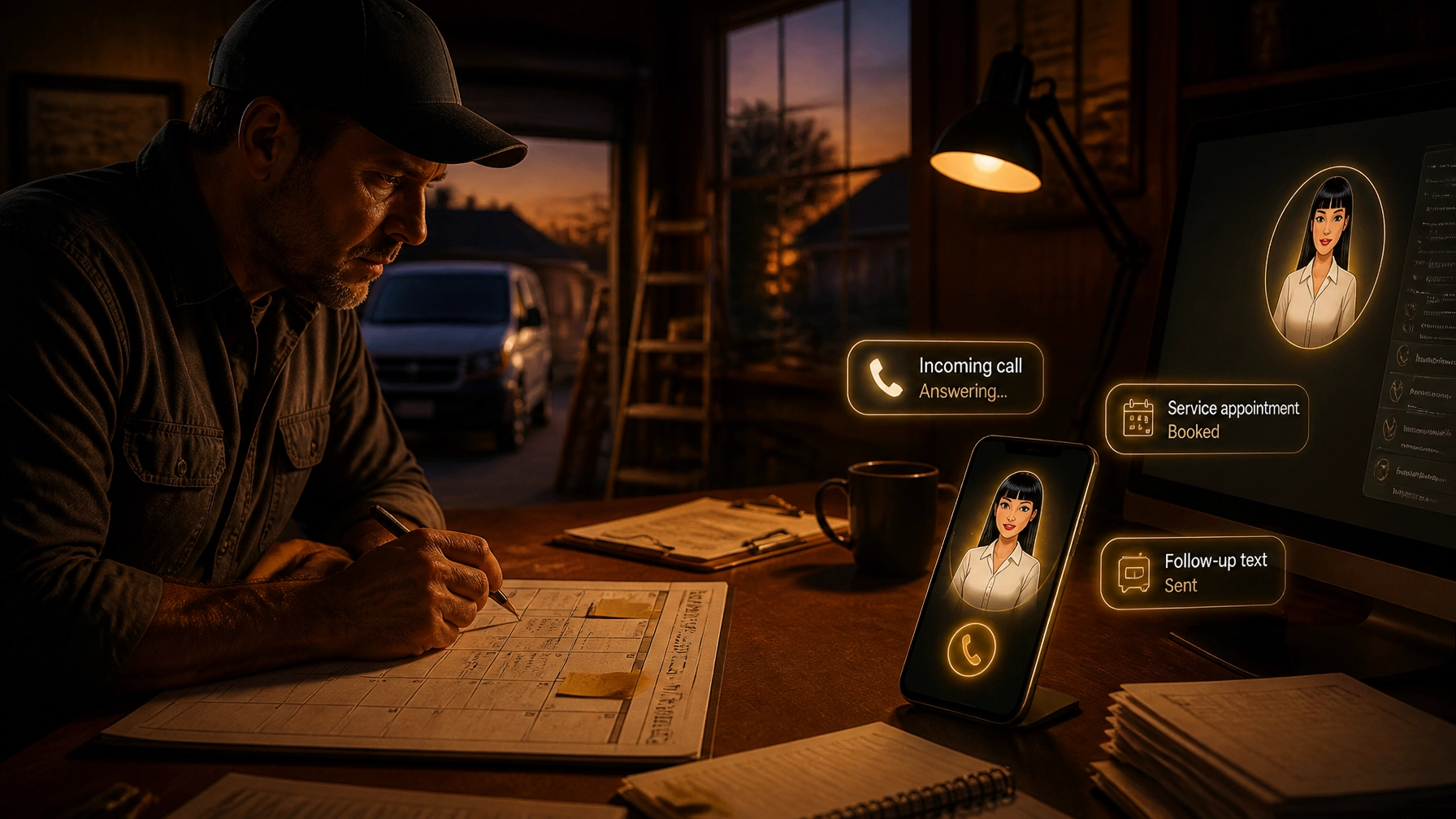
    A Marblism AI receptionist concept for answering business calls

    What does an AI employee actually do?

    The phrase “AI employee” can sound futuristic.

    In simple terms, think of it as software assigned to a specific role.

    Instead of asking a general chatbot to do everything, you give an AI employee a job. For example:

    • Answer incoming calls
    • Respond to common questions
    • Collect customer details
    • Help schedule appointments
    • Follow up with leads
    • Organize email
    • Support lead generation
    • Prepare content or routine communications

    Marblism’s website presents a range of AI employees from Marblism (@Marblism, where supported), including a receptionist, lead-generation assistant, executive assistant, social media manager, SEO expert, and legal assistant.

    For a local service business, the most obvious starting points may be the receptionist and lead-generation functions.

    The goal is not to replace the expertise of your team.

    The goal is to help your team spend less time chasing routine tasks and more time doing the work customers actually hire you to do!

    Three practical ways Marblism (@Marblism) may help

    1. Answer calls when your team is unavailable

    A receptionist-focused AI employee can help respond to calls outside the moments when your team can pick up.

    That could mean evenings, weekends, busy job-site hours, or periods when everyone is already helping another customer.

    Depending on the setup, it may be able to answer basic questions, gather information, and help move the caller toward an appropriate next step.

    That matters because the first response does not always need to solve the entire problem.

    Sometimes, the first response simply needs to reassure the customer that they have reached the right business and that their request is being handled.

    Of course, you should decide what the AI is allowed to say, what information it can access, and when a person must take over. Clear boundaries are important, especially for urgent requests, pricing questions, safety concerns, and complicated jobs.

    2. Turn interest into scheduled work

    A service business does not grow from calls alone.

    It grows when the right calls and inquiries turn into estimates, appointments, and completed jobs.

    An AI assistant may help with that transition by collecting details such as:

    • The customer’s name and contact information
    • The service they are requesting
    • Their location or service area
    • The preferred day or time
    • Basic details about the job
    • Whether the request is urgent

    With the right calendar and workflow, a system may also help with scheduling or sending appointment information.

    This can reduce the number of “I’ll get back to you” moments that never become a follow-up.

    It does not mean every inquiry will become a customer. No honest system can promise that.

    It does mean your business can create a more consistent process for handling interest.

    3. Follow up before the lead goes cold

    Follow-up is one of the simplest parts of sales: and one of the easiest to neglect.

    A customer may request an estimate and then get distracted. They may ask a question by email and forget to respond. They may call after business hours and never try again.

    A timely message can keep the conversation moving.

    Marblism (@Marblism, where supported) describes AI employees that can assist with lead generation and follow-ups. Depending on your configuration, this could help with messages such as:

    • “Thanks for reaching out. We received your request.”
    • “Would you still like to schedule an estimate?”
    • “Here are the next available appointment times.”
    • “Do you have any questions before we confirm your booking?”
    • “How did everything go after your service?”

    The words and timing should reflect your business. A helpful follow-up should feel clear and respectful: not like a flood of automated messages.

    Why this can be valuable for a small business

    Hiring a traditional employee is a major decision.

    There is recruiting, training, payroll, scheduling, time off, and the challenge of finding someone who can consistently handle repetitive work with care.

    An AI employee is a different kind of tool. It is not a human team member, and it cannot replace judgment, craftsmanship, or personal relationships.

    But it may help with a defined set of repeatable tasks.

    That can be useful for a small business that is not ready to hire an office employee but still needs better coverage.

    It can also help an established team reduce the administrative load that builds up during a busy season.

    An AI lead-generation assistant helping a business keep its pipeline moving

    Start with one clear job

    You do not have to automate everything at once.

    In fact, starting small may be the better approach.

    Ask yourself:

    1. Where do opportunities disappear most often?
    2. Are missed calls the biggest issue?
    3. Are website leads waiting too long for a response?
    4. Is follow-up inconsistent after estimates?
    5. Is the owner spending too much time on scheduling and email?
    6. Which tasks have clear rules and repeatable steps?

    If missed calls are the problem, explore a receptionist-style workflow.

    If leads are not receiving consistent follow-up, explore lead-generation support.

    If the owner is buried in email and scheduling, an executive-assistant-style function may be more appropriate.

    The clearer the assignment, the easier it is to evaluate whether the tool is helping.

    What to check before you get started

    Before putting any AI employee in front of customers, take a little time to build the process.

    Review the following:

    • What services do you offer?
    • What areas do you serve?
    • What questions should be asked first?
    • What information must be collected?
    • What pricing can be shared, if any?
    • Which calls require a human?
    • What counts as an emergency?
    • What calendar or software should be connected?
    • How often should follow-ups be sent?
    • How will your team review conversations?

    You should also check Marblism’s current pricing, features, integrations, onboarding process, privacy information, and cancellation or refund terms before signing up. Products change, and the details available today may be different later. If the publishing format supports it, tag @Marblism there as well.

    The Marblism site says it supports guided onboarding and integrations with tools such as Gmail, Outlook, Google Calendar, and social platforms. Confirm that the tools you rely on are supported for the specific workflow you want to build.

    The bigger idea: protect your team’s capacity

    Here is the part I find most interesting.

    Business owners often respond to missed opportunities by simply trying to work harder. They stay up later, check email between jobs, return calls at night, and promise themselves they will catch up on the weekend.

    That approach has a limit.

    The answer is not always more effort. Sometimes the answer is a better system.

    For a local service business, a consistent system for answering calls, organizing inquiries, booking work, and following up may create more breathing room. It can help the business respond more reliably without asking the owner to be everywhere at once.

    That is the value of exploring an AI employee.

    Not magic.

    Not a guarantee.

    A practical support layer for the parts of the customer journey that are easy to miss.

    Take a look at Marblism (@Marblism)

    If you run a service business, I encourage you to explore the idea for yourself.

    You can visit Marblism through my partner link and see whether Marblism (@Marblism, where supported) and its AI employees fit the way your business operates.

    You can also reach out to me anytime if you want to talk through the problem you are trying to solve.

    QR code linking to Marblism through Eric Batchler’s partner URL

    Scan the QR code or use this link:
    https://marblism.com?via=eric-batchler

    And if you use the QR code in print, test it with more than one phone before distributing it. A quick scan now can save a lot of frustration later!

    The right AI employee may not do every job in your business.

    It may not be the right fit for every business.

    But if missed calls, slow follow-ups, and scattered scheduling are costing you opportunities, it is worth taking a closer look.

    Sometimes growth starts by making sure the opportunities you already have do not slip through the cracks!

  • How to Get Past the Mental Wall When Lifting: Build Capacity Before You Add More Weight

    How to Get Past the Mental Wall When Lifting: Build Capacity Before You Add More Weight

    You know the feeling.

    The bar is loaded. Your warm-up moved well. You have done the work. But when it is time to lift something heavy, your mind suddenly hits the brakes.

    Maybe you hesitate before the unrack. Maybe the weight feels heavier than it should. Maybe one difficult rep turns into a story about your strength, your progress, or your future.

    The instinct is usually simple: try harder!

    Sometimes that helps. But not always.

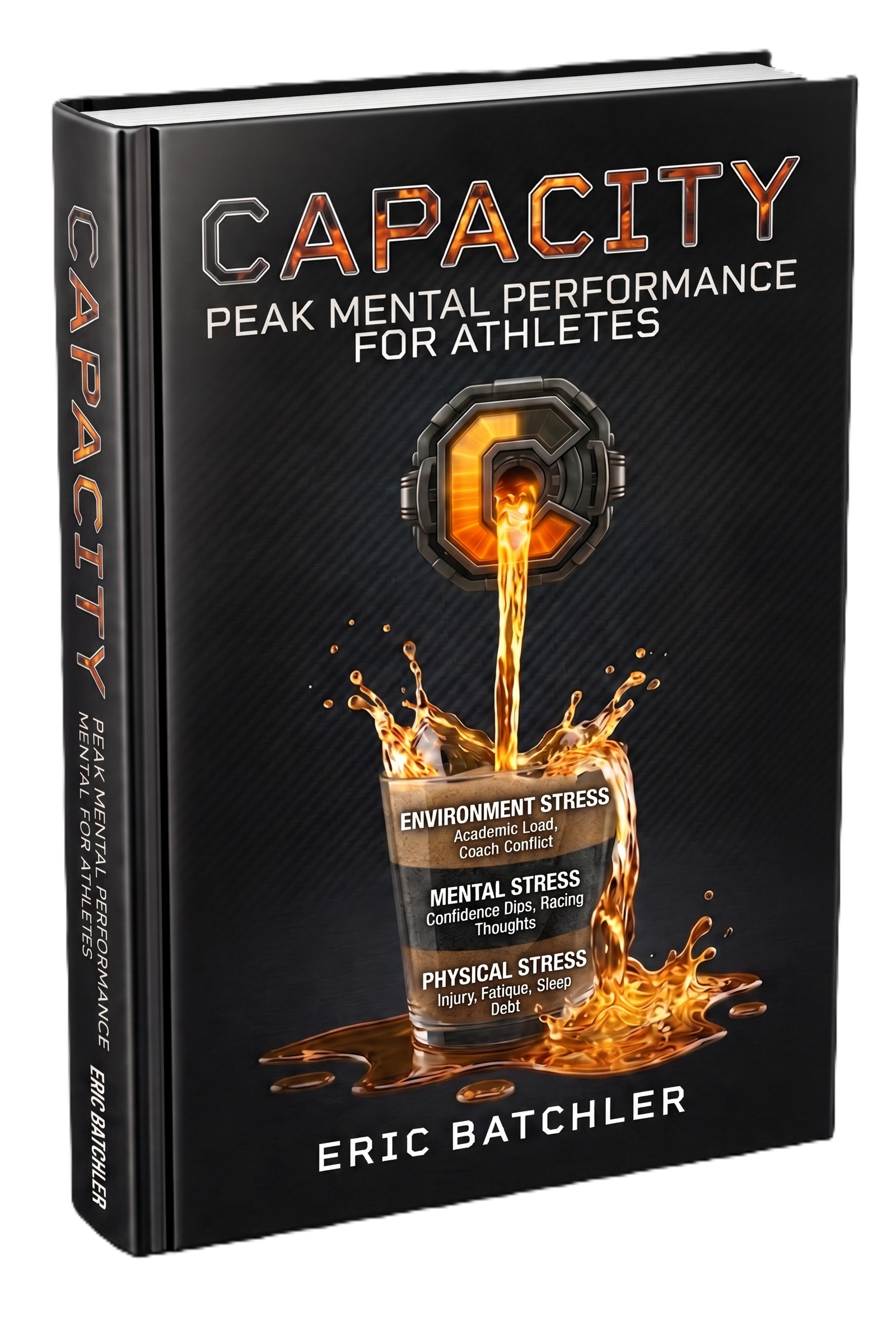
    As explored in Peak Mental Performance for Athletes, the better question may be:

    How much capacity do I have available right now?

    The Mental Wall May Not Be a Motivation Problem

    A mental wall is not always a sign that you are lazy, soft, or lacking mental toughness.

    It may be information.

    Your body and mind are constantly managing stress. Training is one source of stress, but it is not the only one. School, work, family conflict, poor sleep, pressure from teammates, fear of failure, and uncertainty can all affect how much capacity you bring into the weight room.

    This is where the Capacity/Cup Theory framework helps.

    Imagine that your potential is a cup. Stress is sand filling that cup. The more sand inside, the less room you have available for training, focus, recovery, and execution.

    Adding more weight to a nearly full cup does not automatically make the cup bigger.

    It may simply cause the cup to overflow.

    Infographic showing physical, psychological, and life sand filling an athlete's cup

    The Three Types of Sand Filling Your Cup

    Before you decide to force your way through a lifting wall, take a quick look at what may be filling your cup.

    1. Physical sand

    Physical sand includes the stress your body is carrying.

    That could mean:

    • Hard training sessions stacked too closely together
    • Muscle soreness that has not cleared
    • A recent injury or illness
    • Lack of sleep
    • Poor hydration or nutrition
    • Travel, competition, or a demanding schedule

    Physical fatigue matters. A tired athlete may still be willing to work, but willingness does not erase recovery needs.

    2. Psychological sand

    Psychological sand includes the thoughts and emotions that consume attention.

    Fear of missing a lift can create hesitation. A previous injury can make you doubt a movement. Comparing yourself to a stronger teammate can turn a normal training day into a test of your worth.

    You may be physically ready to lift, but mentally busy trying to avoid failure.

    That mental noise uses capacity!

    3. Life sand

    Life sand comes from everything outside the gym.

    Family stress. Exams. A job. Relationship problems. Financial concerns. A difficult conversation. Social pressure. Even excitement about an upcoming event can take up mental space.

    The weight room does not exist in a vacuum. You bring your whole life with you.

    That is why the same weight can feel manageable one day and overwhelming the next.

    Productive Discomfort or Overload?

    Mental toughness training is not about ignoring every warning signal.

    There is a big difference between productive discomfort and overload.

    Productive discomfort may feel like:

    • Muscular effort and fatigue
    • Controlled breathing
    • A challenging but familiar movement
    • Temporary doubt that you can answer with a clear cue
    • A difficult rep completed with stable technique
    • Discomfort that stays within your planned training range

    Overload may look like:

    • Sharp, sudden, or localized pain
    • Technique breaking down repeatedly
    • Loss of control during the movement
    • Unusual dizziness, weakness, or confusion
    • Fear that continues to escalate
    • Fatigue that has been building for days
    • A pattern of dread, irritability, or declining performance

    Productive discomfort asks you to stay present.

    Overload asks you to pay attention.

    If you feel pain, unusual symptoms, or a loss of control, stop and involve the appropriate coach or health professional. No mental toughness slogan is worth ignoring a potential injury.

    Ask: “What Is Filling My Cup?”

    When you hit the wall, pause before changing the weight.

    Ask yourself three quick questions:

    1. What is happening physically?
    2. What is happening psychologically?
    3. What is happening in my life outside training?

    You do not need a perfect answer.

    You are simply trying to identify the source of the pressure.

    Maybe your legs are fatigued from a demanding week. Maybe you are worried about missing in front of your teammates. Maybe you slept four hours because of an exam.

    Each answer points toward a different adjustment.

    A physical issue may call for more recovery or a reduced training load. A psychological issue may call for a mental routine. A life stressor may require you to lower expectations for the day instead of pretending nothing is happening.

    This is not making excuses.

    It is managing the conditions that influence performance.

    Use ARR When the Bar Feels Heavy

    One of the practical tools in the Capacity framework is ARR:

    Anchor. Reframe. Reset.

    You can use it in a few seconds before a heavy set.

    ARR Anchor Reframe Reset mental performance system for athletes

    Anchor

    Start with something physical and immediate.

    Feel your feet on the floor. Notice your grip. Take one controlled breath. Relax your jaw and shoulders. Look at one fixed point.

    Your goal is to get out of the future and back into the moment.

    Try:

    “Feet planted. Hands set. One breath.”

    Reframe

    Name the thought without allowing it to become a fact.

    Instead of:

    “I cannot lift this.”

    Try:

    “This is a challenging set, and my job is to execute the next step.”

    Or:

    “Feeling nervous does not mean I am unprepared.”

    A useful reframe does not need to sound dramatic. It needs to be believable and connected to action.

    Reset

    Choose one small, controllable target.

    That might be:

    • Brace before the rep
    • Keep the bar path steady
    • Drive through the floor
    • Complete the setup correctly
    • Perform the first rep with control

    Do not ask your brain to solve the entire workout. Give it one job!

    Athlete stress overflowing from a cup to represent burnout and excessive training load

    Build Capacity Before You Add More Weight

    When progress stalls, many athletes immediately add intensity.

    More weight. More sets. More conditioning. More pressure.

    But sometimes the next step is not adding more. It is clearing some sand.

    That might mean:

    • Going to bed earlier
    • Taking a lighter training day
    • Eating and hydrating consistently
    • Addressing a fear with your coach
    • Reducing unnecessary comparison
    • Creating space between demanding sessions
    • Limiting extra work that is not serving the plan
    • Using a short recovery routine after training

    This is one of the most important ideas in mental training for athletes:

    Recovery is not separate from performance. Recovery supports performance.

    You are not building capacity by constantly emptying yourself. You are building capacity by learning how to manage stress, recover, and return ready to work.

    Guidance for Athletes

    You do not need to track every detail of your life perfectly.

    Start with a simple pre-training capacity check.

    Rate yourself from 1 to 5 in three areas:

    • Physical energy
    • Mental focus
    • Life stress

    Then look at the pattern.

    A low score does not automatically mean you should skip training. It gives you useful information before the session begins.

    You and your coach can decide whether the goal for the day is strength, technique, movement quality, or recovery.

    That flexibility is not weakness. It is intelligent training.

    Guidance for Coaches

    Coaches have a major role in mental toughness for athletes.

    If every difficult session is treated as a character test, athletes may learn to hide fatigue, pain, or stress. That can make the training environment less honest and less safe.

    Instead, ask better questions:

    • “What is your capacity today?”
    • “Is this a technique problem, a confidence problem, or a fatigue problem?”
    • “What adjustment would help you execute well?”
    • “What is the smallest useful goal for this set?”

    You can still hold high standards without demanding the same response from every athlete on every day.

    The goal is not to remove challenge. The goal is to make challenge productive.

    Guidance for Parents

    Parents can support an athlete’s mental performance by reducing pressure around every number.

    After training, try asking:

    • “What did you learn today?”
    • “What helped you stay focused?”
    • “What felt manageable?”
    • “What do you want to adjust next time?”

    Avoid turning one missed lift into a judgment about commitment or toughness.

    Athletes need room to tell the truth about their physical and mental state. That honesty helps coaches make better decisions and helps athletes develop self-awareness.

    Turn the Wall Into Information

    The mental wall is frustrating, but it can also teach you something.

    Maybe your current program is asking for more than your recovery supports. Maybe fear is interfering with execution. Maybe life stress is taking up more room than you realized.

    The answer is not always to push harder.

    Sometimes the strongest move is to Anchor, Reframe, and Reset. Sometimes it is to reduce a manageable stressor. Sometimes it is to recover and return with a clearer cup.

    If you want to explore these ideas further, start with Peak Mental Performance for Athletes or take the free Capacity Scorecard.

    And if you want help turning mental skills into a repeatable routine, mental performance coaching can give you a place to start.

    You do not have to prove your toughness by ignoring what your mind and body are telling you.

    Build capacity. Protect recovery. Then add weight when you are ready!

  • How to Get Out of a Hitting Slump: Build Space for Better At-Bats

    How to Get Out of a Hitting Slump: Build Space for Better At-Bats

    Every hitter goes through it.

    The ball looks smaller. Your timing feels late. Good pitches turn into weak contact, and bad pitches somehow become swings you wish you could take back.

    Then the numbers start talking.

    You check your batting average. You think about your last strikeout. You wonder whether your teammates, coaches, or parents are noticing. Before long, every at-bat feels like a test.

    So, how do you get out of a hitting slump?

    You do not start by assuming your talent disappeared.

    You start by asking a better question:

    What is taking up space in my mental cup?

    A Slump Does Not Mean You Lost Your Ability

    A hitting slump can feel like proof that something is permanently wrong. It is not.

    A slump is a stretch of performance where the results are not matching your ability. That mismatch can come from mechanics, timing, pitch recognition, confidence, fatigue, stress, or several factors at once.

    Sometimes there is a physical adjustment to make. A qualified hitting coach can help you check your stance, load, timing, or swing path.

    But sometimes your swing is mostly fine.

    The bigger issue is that your available attention and energy have been reduced. You are trying to hit while carrying too much extra weight mentally and physically.

    That is where the Capacity framework from Peak Mental Performance for Athletes can help.

    Think About Your Capacity Like a Cup

    Imagine that your potential is a cup.

    The cup represents everything you are capable of doing as a hitter. Your vision, timing, strength, preparation, instincts, and experience are still there.

    Now imagine sand filling that cup.

    The sand represents stress. As the cup fills, there is less room available for you to access your skills naturally.

    Three Sands of Talent infographic showing physical, psychological, and life stress

    Physical Sand

    Physical sand includes things such as:

    • Poor sleep
    • Soreness or injury
    • Heavy training loads
    • Dehydration
    • Poor nutrition
    • General fatigue
    • Recovery that has been overlooked

    When your body is tired, hitting can require more effort. Your reactions may feel slower, and your ability to stay balanced can suffer.

    Psychological Sand

    Psychological sand includes:

    • Fear of striking out
    • Frustration with recent results
    • Overthinking your mechanics
    • Pressure to live up to expectations
    • Comparing yourself with teammates
    • Worrying about losing your role
    • Trying too hard to prove yourself

    This type of sand can make the batter’s box feel crowded. Instead of seeing the pitch, you may be thinking about what the pitch means.

    Life Sand

    Life sand comes from outside baseball.

    School, family conflict, friendships, social media, financial stress, work, travel, and other responsibilities can all take up mental space. You may not feel stressed about baseball specifically, but your brain still brings the rest of life with you to the plate.

    A full cup does not mean you are weak.

    It means you are human.

    Start by Identifying What Is Filling the Cup

    Before changing your swing, take a quick capacity check.

    Ask yourself:

    1. What is filling my cup physically?
    2. What is filling my cup psychologically?
    3. What is filling my cup through life outside baseball?
    4. What is one piece of sand I can reduce today?

    You do not need to solve everything at once.

    Maybe the answer is getting to bed earlier. Maybe it is telling your coach that you are feeling overwhelmed. Maybe it is taking ten minutes away from your phone before practice.

    You might also discover that you have been carrying the pressure of every previous at-bat into the next one.

    That is sand you can begin to release.

    Stop Trying to Fix Everything at Once

    One of the fastest ways to make a slump feel worse is to collect too many swing thoughts.

    Keep your hands inside.

    Stay back.

    See the ball.

    Do not pull off.

    Be aggressive.

    Be patient.

    Stay relaxed.

    Now your brain is trying to manage six instructions while reacting to a pitch that may reach the plate in less than half a second.

    That is a lot of traffic.

    After you and your coach rule out an obvious mechanical issue, simplify. Choose one or two process cues for the game.

    Examples include:

    • “See the ball early.”
    • “Attack my pitch.”
    • “Stay balanced.”
    • “Drive it through the middle.”
    • “Breathe and compete.”
    • “Use the big part of the field.”

    These cues do not guarantee a hit. They give your attention a clear job.

    That matters because the goal is not to control the result. You cannot control whether a hard-hit ball finds a glove.

    You can control your preparation, decision-making, effort, and response.

    Use Anchor, Reframe, Reset

    The Capacity approach includes a simple mental-performance routine: Anchor, Reframe, Reset.

    You can use it between pitches, between at-bats, or after a difficult game.

    ARR Anchor Reframe Reset three-gear mental performance system

    1. Anchor

    An anchor brings your attention back to the present moment.

    It could be:

    • One slow breath
    • Feeling both feet in the dirt
    • Adjusting your batting gloves
    • Looking at a specific point beyond the field
    • Repeating a short phrase

    Try this:

    Inhale slowly. Feel your feet. Exhale fully.

    The anchor is not meant to erase frustration. It gives you a reliable action to perform when frustration shows up.

    2. Reframe

    A reframe changes the meaning you are giving the situation.

    Instead of:

    “I cannot buy a hit.”

    Try:

    “I am in a difficult stretch, and I can still compete one pitch at a time.”

    Instead of:

    “Everyone expects me to fail.”

    Try:

    “Expectations do not decide what I do with the next pitch.”

    Instead of:

    “I have to get a hit here.”

    Try:

    “My job is to see the ball and make a good decision.”

    A reframe should be factual and useful. You do not need to pretend everything is perfect.

    You are not trying to convince yourself that a slump is fun. You are reminding yourself that a slump is temporary and that you still have controllable actions available.

    3. Reset

    The reset is your next action.

    Step out of the box. Take your breath. Use your cue. Step back in with a clear plan.

    Then let the next pitch be the next pitch.

    A reset does not promise that you will get a hit. It protects the next opportunity from being controlled by the last one.

    A Simple Between-Pitch Routine

    Here is a rapid reset you can practice in every at-bat:

    Step One: Release

    Acknowledge the last pitch without replaying it.

    Say:

    “That pitch is over.”

    If you made a mistake, learn what you need to learn. Then stop dragging the mistake forward.

    Step Two: Breathe

    Take one slow breath.

    Relax your jaw, shoulders, and hands. Physical tension often gives your mind a signal that danger is nearby.

    Step Three: Reconnect

    Feel your feet and look toward the pitcher.

    Return to your one process cue:

    “See it early.”

    Step Four: Commit

    Step into the box with your plan.

    You are not trying to guarantee the outcome. You are committing to your approach.

    This routine may feel too simple at first. That is okay. Mental training for athletes is not about finding the most complicated strategy. It is about building a response you can use when your thoughts get loud.

    Coaches: Help Hitters Create Space

    Coaches can make a major difference during a slump.

    Start by separating performance feedback from personal judgment. A hitter who is struggling already knows the results are not where they want them to be.

    Instead of repeating “You have to hit,” help the athlete identify a process goal.

    Ask:

    • What pitch are you looking for?
    • What will tell you that you had a good at-bat?
    • What is your between-pitch routine?
    • What is one cue you can trust today?
    • What might be filling your cup right now?

    A strong mental performance coach for athletes does not simply tell players to be tougher. Mental toughness for athletes is not pretending pressure does not exist.

    It is learning how to respond when pressure, fatigue, and disappointment are present.

    You can learn more about mental performance coaching with Eric Batchler.

    Parents: Support the Person, Not Just the Stat Line

    Parents can also help create room.

    After a difficult game, try asking:

    • “How did you feel out there?”
    • “What did you learn?”
    • “What part of your routine worked?”
    • “What do you want to focus on at the next practice?”

    You do not have to provide a full hitting analysis in the car ride home.

    Your athlete may need a meal, a shower, sleep, or a reminder that one game does not define them.

    That kind of support is part of the environment surrounding performance. It can either add sand to the cup or help clear some of it.

    Build Evidence Through Small Wins

    When you are in a slump, your brain may collect every failure and ignore everything else.

    So start collecting better evidence.

    A good at-bat might include:

    • Taking a close pitch
    • Competing deep into the count
    • Seeing the ball early
    • Making hard contact
    • Advancing a runner
    • Staying with your plan after a bad call
    • Resetting after a strikeout

    Not every good process produces a hit. That does not make the process meaningless.

    Track those controllable wins for a week. You may begin to notice that your game is not as broken as the numbers made it feel.

    The Goal Is More Space, Not More Pressure

    Getting out of a hitting slump is not about forcing confidence or demanding instant results.

    It is about making room.

    Reduce the physical sand where you can. Name the psychological sand instead of letting it run the conversation. Notice the life sand that may be following you to the field.

    Then simplify your job.

    Anchor. Reframe. Reset.

    Use one clear process cue. Compete with the next pitch. Let the result be what it is.

    Your talent did not vanish because you went through a difficult stretch. Your job is to create enough space for the skills you already have to show up again.

    For more tools from Peak Mental Performance for Athletes, visit the Capacity series, explore the Capacity Scorecard, or reach out to Eric about coaching and workshops.

    Stay patient. Keep practicing. And remember: one at-bat does not have to carry your entire season!

  • Talent Doesn’t Disappear, Space Does: How Athletes Can Build More Capacity Under Pressure

    Talent Doesn’t Disappear, Space Does: How Athletes Can Build More Capacity Under Pressure

    Have you ever watched an athlete struggle and thought, “What happened to their talent?”

    Maybe they were sharp in practice but froze in competition. Maybe they looked confident last season but now seem distracted, tired, or frustrated. Maybe they are working harder than ever but getting less from their effort.

    Here’s a different way to look at it:

    Talent may not have disappeared. The available space did.

    That idea is at the center of Peak Mental Performance for Athletes, the first book in Eric Batchler’s Capacity series. The book’s practical framework helps athletes, coaches, and parents understand what happens when stress fills the cup: and what to do next.

    The Cup Theory: Potential Isn’t the Same as Capacity

    Picture a cup.

    The cup represents an athlete’s potential: the skills, experience, athleticism, and ability they could bring to the moment.

    Now picture sand being poured into that cup. The sand represents stress.

    When the cup has plenty of open space, an athlete can think clearly, respond to mistakes, and access the skills they have practiced.

    When the cup is nearly full, even a small disruption can create a big reaction.

    A bad call. A missed assignment. A tough opponent. A parent’s comment. One more demanding practice.

    And when training load is added to a cup already full of sand, the result may be burnout, failure, shutdown, or a performance that looks far below the athlete’s normal ability.

    Cup Theory illustration showing stress filling a cup until additional training load overflows into burnout or failure

    The goal is not always to demand more.

    Sometimes the goal is to create more room.

    What Fills an Athlete’s Cup?

    The Capacity framework organizes stress into three broad categories: physical sand, psychological sand, and life sand.

    1. Physical Sand

    Physical sand includes the demands placed on the body.

    This might include:

    • Hard training sessions
    • Too many competitions
    • Soreness or injury
    • Travel
    • Poor nutrition
    • Sleep debt
    • Inadequate recovery

    An athlete who is sleeping five or six hours, carrying an injury, and going from one intense session to another may not need a lecture about effort.

    They may need recovery.

    Physical stress can affect more than the body. Fatigue can reduce attention, patience, confidence, and emotional control. That makes ordinary competitive pressure feel much heavier.

    2. Psychological Sand

    Psychological sand is the mental and emotional pressure an athlete carries.

    It can include:

    • Fear of failure
    • Racing thoughts
    • Perfectionism
    • Confidence dips
    • Worry about playing time
    • Pressure to meet expectations
    • Team conflict
    • Constant self-criticism

    This type of stress can be difficult to see. An athlete may look physically ready while mentally carrying a full cup.

    They may be thinking about the last mistake, the next mistake, what the coach is thinking, or what everyone in the stands might say.

    That leaves less attention for the actual task.

    3. Life Sand

    Life does not stop because an athlete has a game.

    Life sand may include:

    • Exams and school deadlines
    • Family issues
    • Work responsibilities
    • Financial stress
    • Relationship problems
    • Moving or changing schools
    • Lack of transportation or field access
    • Social pressure

    These stressors are not excuses. They are context.

    If we ignore them, we may misread the athlete’s behavior. A player who seems unfocused may not lack discipline. They may be trying to compete while carrying problems no one has asked about.

    That is why effective mental performance coaching looks at the whole person, not just the scoreboard.

    The First Step Is a Capacity Check

    Before asking an athlete to push harder, ask a better question:

    What is filling the cup today?

    A simple capacity check can take less than a minute. Ask the athlete to rate each category from 0 to 10:

    • Physical stress: ___ / 10
    • Psychological stress: ___ / 10
    • Life stress: ___ / 10

    Then ask:

    • What is taking up the most space?
    • What part of this can we change today?
    • What support would make today more manageable?
    • What is the most important task for the next hour?

    This is not about finding a perfect score.

    It is about noticing the load before the cup overflows.

    The Capacity Scorecard can also help athletes, coaches, and families start that conversation.

    Reduce the Manageable Sand

    Not every stressor can be removed immediately.

    An injury may require time. A difficult exam cannot always be postponed. Competition pressure is part of sport.

    But many stressors can be reduced, clarified, or organized.

    Athletes Can:

    • Protect a consistent sleep routine
    • Tell a coach when soreness is becoming pain
    • Replace vague worry with one specific question
    • Prepare equipment and meals ahead of time
    • Limit unnecessary phone or social media pressure before competition
    • Use process goals instead of outcome goals
    • Schedule recovery instead of treating it as optional
    • Ask for help before reaching a breaking point

    Small changes matter because a cup does not usually overflow from one giant event.

    It often overflows from many manageable stressors that were never addressed.

    Coaches Can:

    • Check workload instead of assuming more is better
    • Make roles and expectations clear
    • Give athletes permission to ask questions
    • Avoid turning every mistake into a character judgment
    • Build pressure into selected practices: not every practice
    • Teach mental skills when athletes are calm, not only when they are struggling
    • Notice changes in behavior, energy, and communication

    Mental toughness for athletes is not the same as pretending nothing affects them.

    Real toughness includes awareness, adjustment, and the ability to use support.

    Parents Can:

    • Ask, “How full is your cup today?” instead of “Why didn’t you play better?”
    • Listen before offering solutions
    • Keep post-game conversations simple
    • Avoid adding outcome pressure in the car ride home
    • Help protect sleep, meals, transportation, and recovery
    • Praise preparation, communication, and response to adversity

    Parents do not need to become sports psychologists.

    They can make a major difference simply by becoming a source of less sand.

    A Simple Competition Reset: Anchor, Reframe, Reset

    When an athlete is already competing, there may not be time for a long conversation.

    That is where the ARR sequence from Peak Mental Performance for Athletes can help:

    Anchor. Reframe. Reset.

    ARR mental performance protocol showing Anchor, Reframe, and Reset as a three-gear system

    1. Anchor: Return to the Present

    Use one physical action to interrupt the spiral.

    Try:

    • One slow exhale
    • A tap on the hip or thigh
    • Feeling both feet in the ground
    • Relaxing the shoulders
    • Looking at one fixed point

    The anchor is not magic. It is a signal to the body and brain:

    Come back to this moment.

    2. Reframe: Use Factual Self-Talk

    Replace the emotional story with something accurate and useful.

    Instead of:

    “I’m falling apart.”

    Try:

    “That play is over. I can still execute the next one.”

    Instead of:

    “I can’t make another mistake.”

    Try:

    “My job is to make one clear decision.”

    Instead of:

    “Everyone is judging me.”

    Try:

    “The next task is the only thing I can control.”

    This is not forced positivity. It is factual self-talk.

    The goal is to use words that are believable enough to guide action.

    3. Reset: Choose One Micro-Goal

    Finish the reset with one controllable action.

    Examples:

    • See the ball early
    • Finish through the target
    • Win the next footrace
    • Communicate on defense
    • Follow the next pitch
    • Hold the finish
    • Take the next breath

    The athlete does not need to solve the whole game.

    They need to return to the next useful action.

    That is mental training for athletes in a form they can actually use under pressure.

    Building Capacity Is a Daily Process

    Capacity is not built only during a championship moment.

    It is built through daily choices:

    • Recovering well
    • Practicing attention
    • Learning how to respond to mistakes
    • Having honest conversations
    • Creating supportive team environments
    • Developing routines that hold up under stress
    • Gradually practicing pressure instead of avoiding it

    This is also where sports psychology for athletes becomes practical. Visualization, breathing, routines, goal setting, self-talk, and pressure practice are not just concepts to discuss. They are skills to rehearse.

    You want the reset to feel familiar before you need it.

    Fix the Process, Not the Player

    When performance drops, the easiest conclusion is often, “The athlete needs to be tougher.”

    Sometimes the athlete does need a new skill.

    But sometimes the system around them needs to change.

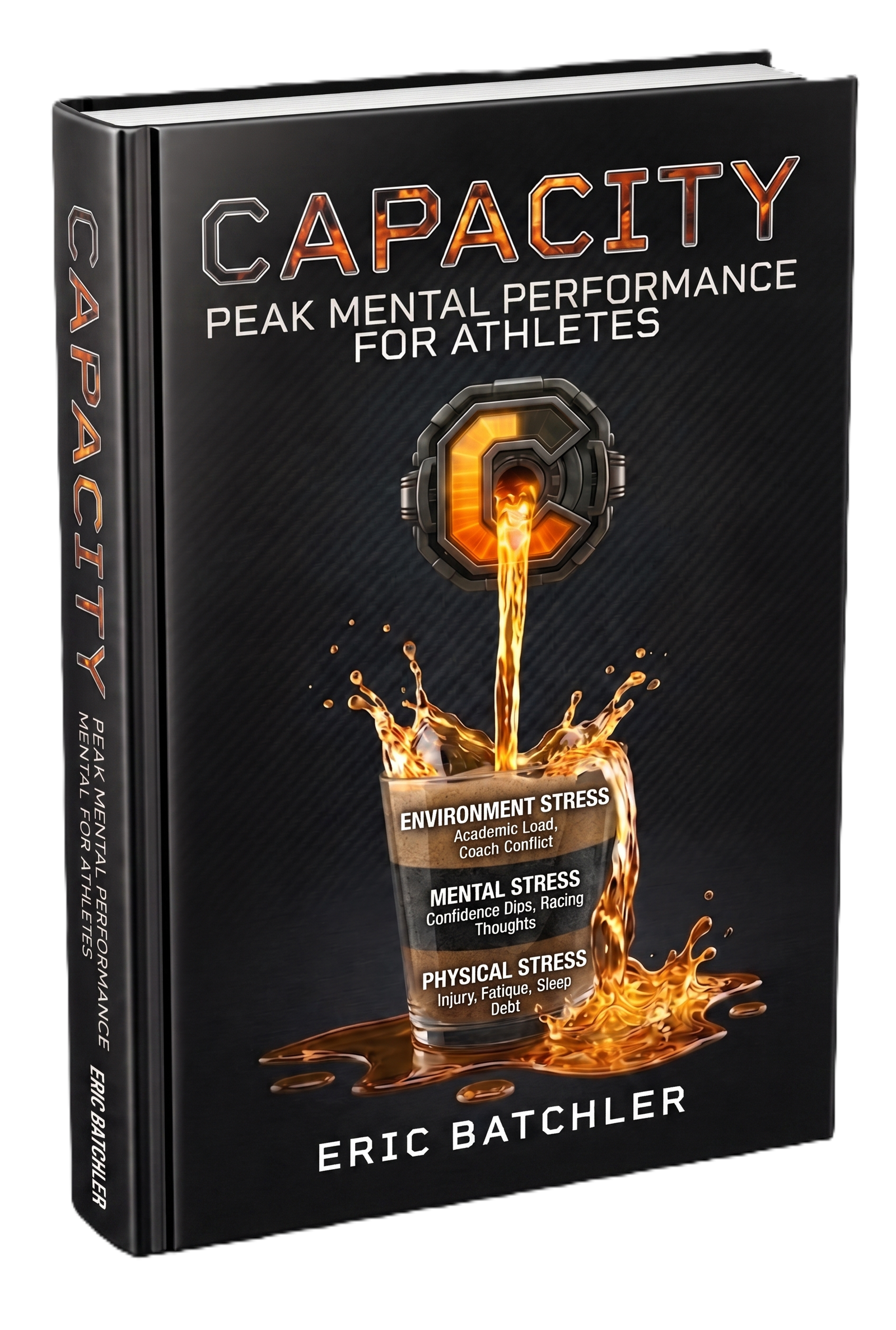
    Promotional image for Capacity: Mental Performance Tools for Athletes

    Ask:

    • Is the training load appropriate?
    • Is the athlete sleeping?
    • Are expectations clear?
    • Is the environment safe enough to make mistakes?
    • Is the athlete carrying a problem that needs support?
    • Are we adding pressure to a cup that is already full?

    A mental performance coach for athletes can help identify these patterns and turn them into a practical plan. Through one-on-one coaching, team workshops, and staff support, the focus is not simply on making athletes work harder.

    It is on helping them protect the space that allows their talent to show up.

    Talent Doesn’t Disappear. Space Does.

    The next time an athlete looks unlike themselves, pause before assuming the talent is gone.

    Look at the cup.

    What physical sand is present? What psychological sand is present? What life sand is present?

    Then ask what can be removed, reduced, supported, or addressed.

    Sometimes the best performance intervention is another repetition.

    Sometimes it is a better recovery plan.

    Sometimes it is one honest conversation and a simple reset before the next play.

    If you want to explore the Capacity framework in more depth, you can learn more about the Capacity series or pick up Peak Mental Performance for Athletes.

    And if this idea helps you or your athlete, share it with a coach or parent who might need it. A quick review of the book is welcome, too!

    Stay tuned for more practical tools for focus, resilience, confidence, and performance under pressure. Reach out anytime( we’re always glad to talk mental performance!)