
Capacity: Peak Mental Performance for Athletes
Peak Mental Performance for Athletes is the book that started it all — the flagship title behind everything Eric Batchler writes and teaches. Capacity isn’t a slogan; it’s a way of understanding what’s actually happening when an athlete freezes under pressure, and a practical set of tools for fixing it. This page walks through the idea itself, the full four-book series built around it, and how the books connect to real coaching and workshops.
The Idea Behind Capacity
Picture a cup and a bucket of sand. The cup is potential — everything an athlete could do. The sand is stress: practice, school, family, the crowd, expectations. Capacity is the room left in the cup after the sand settles. Most coaching tries to build a bigger cup. Capacity starts by clearing the sand and protecting the room that’s already there.
Built around two anchors — Capacity vs. Potential, and the ACCESS ethics for constrained sports — the series gives athletes, coaches, and the adults around them a shared language for the mental side of sport: potential vs. capacity, sand in the cup, fair vs. equal. It replaces vague advice like “want it more” with real tools: ARR (Anchor–Reframe–Reset), scripted visualization and recovery, progressive muscle relaxation, factual self-talk, and a 60-second capacity scan an athlete can run before any practice or game.
Who Capacity Is For
Capacity is written for the whole ecosystem around a competitor, not just the athlete on the field. Athletes use it to protect confidence and perform under pressure without losing their love of the game. Coaches and athletic directors use it to design programs where mental performance is built in, not bolted on. Parents and administrators use it to understand what their athlete’s coach should be doing, and why. And organizations use Book Four’s ACCESS framework to take responsibility for the controllables that too often get quietly reassigned to the athlete alone.
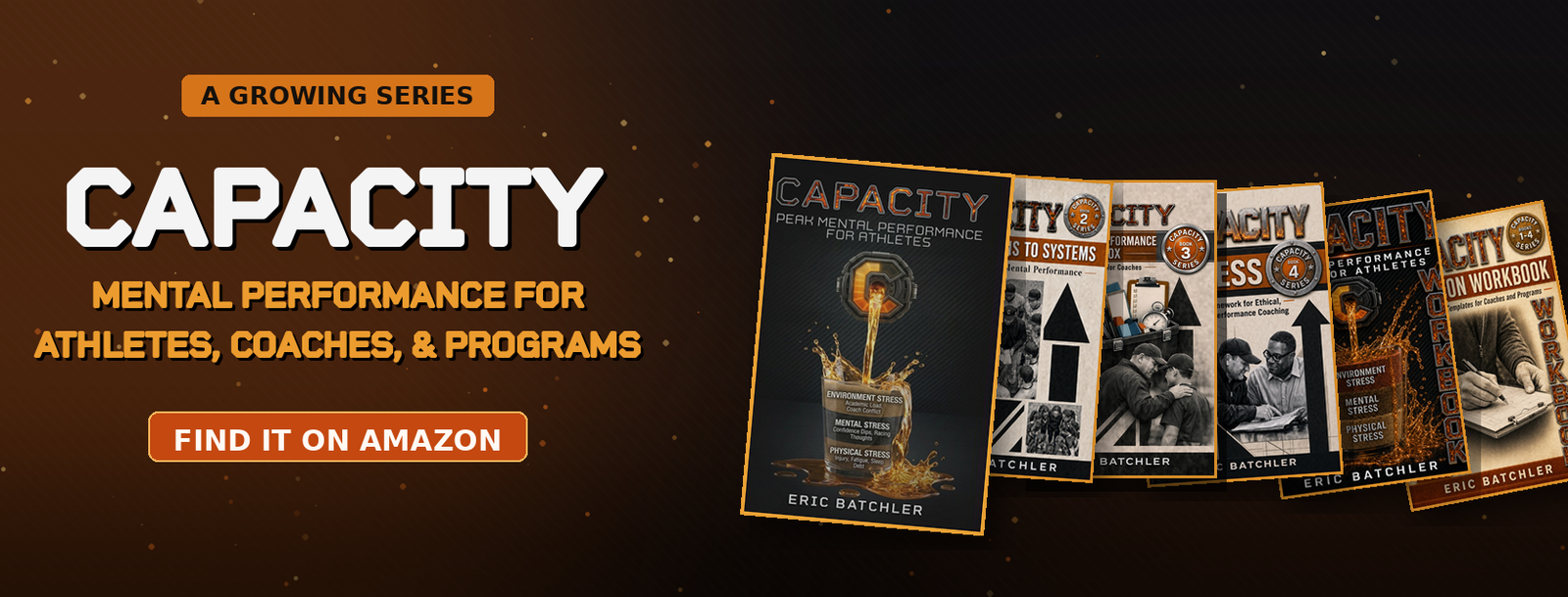
The Four-Book Series
Book One: Peak Mental Performance for Athletes
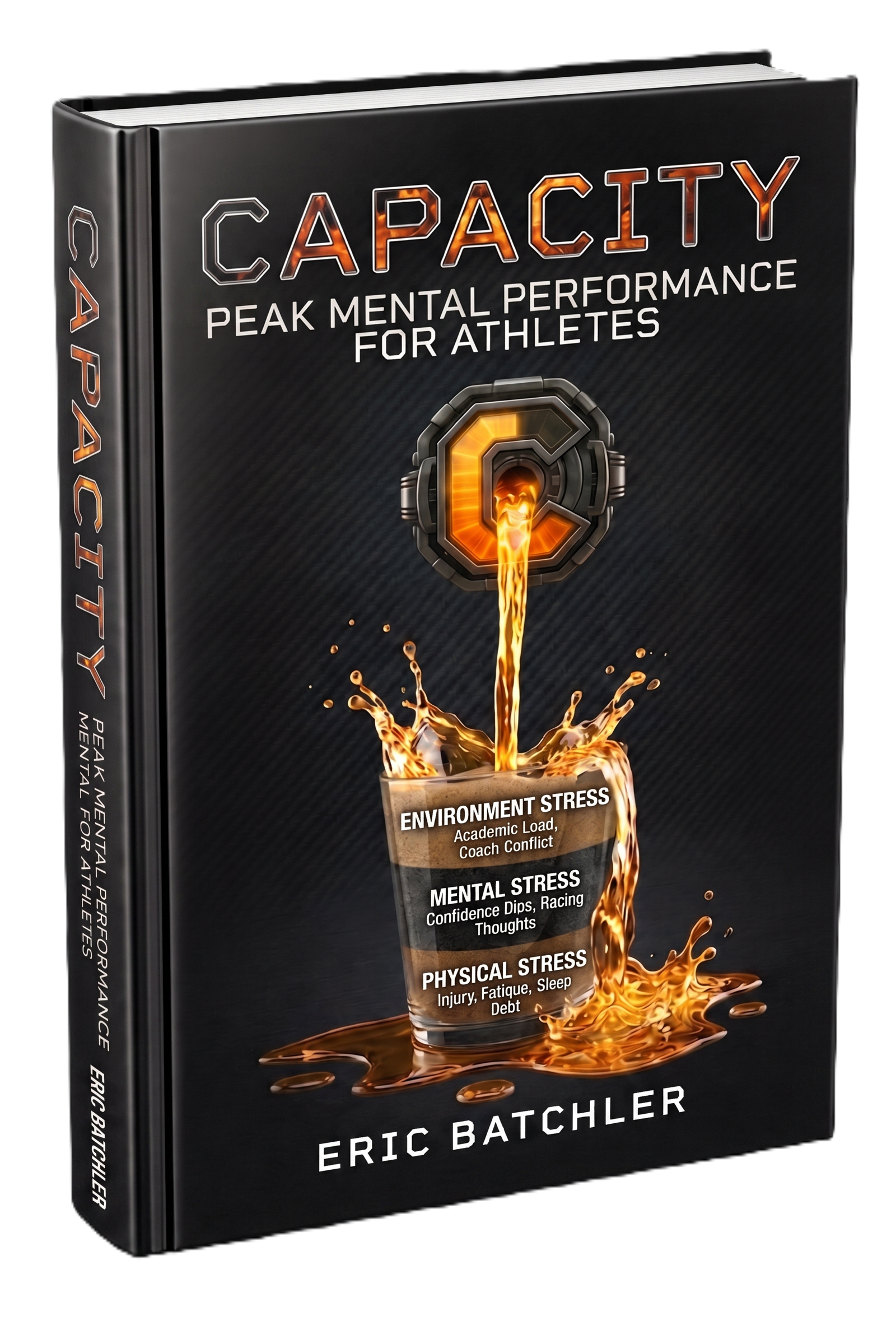
Book One is the flagship of the series and the place to start. It introduces the core Capacity vs. Potential framework — the cup and the sand — and gives athletes a practical, real-time toolkit for the moments that matter most: ARR (Anchor, Reframe, Reset), scripted visualization and recovery, progressive muscle relaxation, factual self-talk, and a 60-second capacity scan to run before any practice or competition. Rather than vague advice like “want it more,” Book One replaces pressure and freezing with tools an athlete can actually use in the batter’s box, on the free-throw line, or in the blocks — building confidence that holds up when it counts.
Book Two: Slogans to Systems
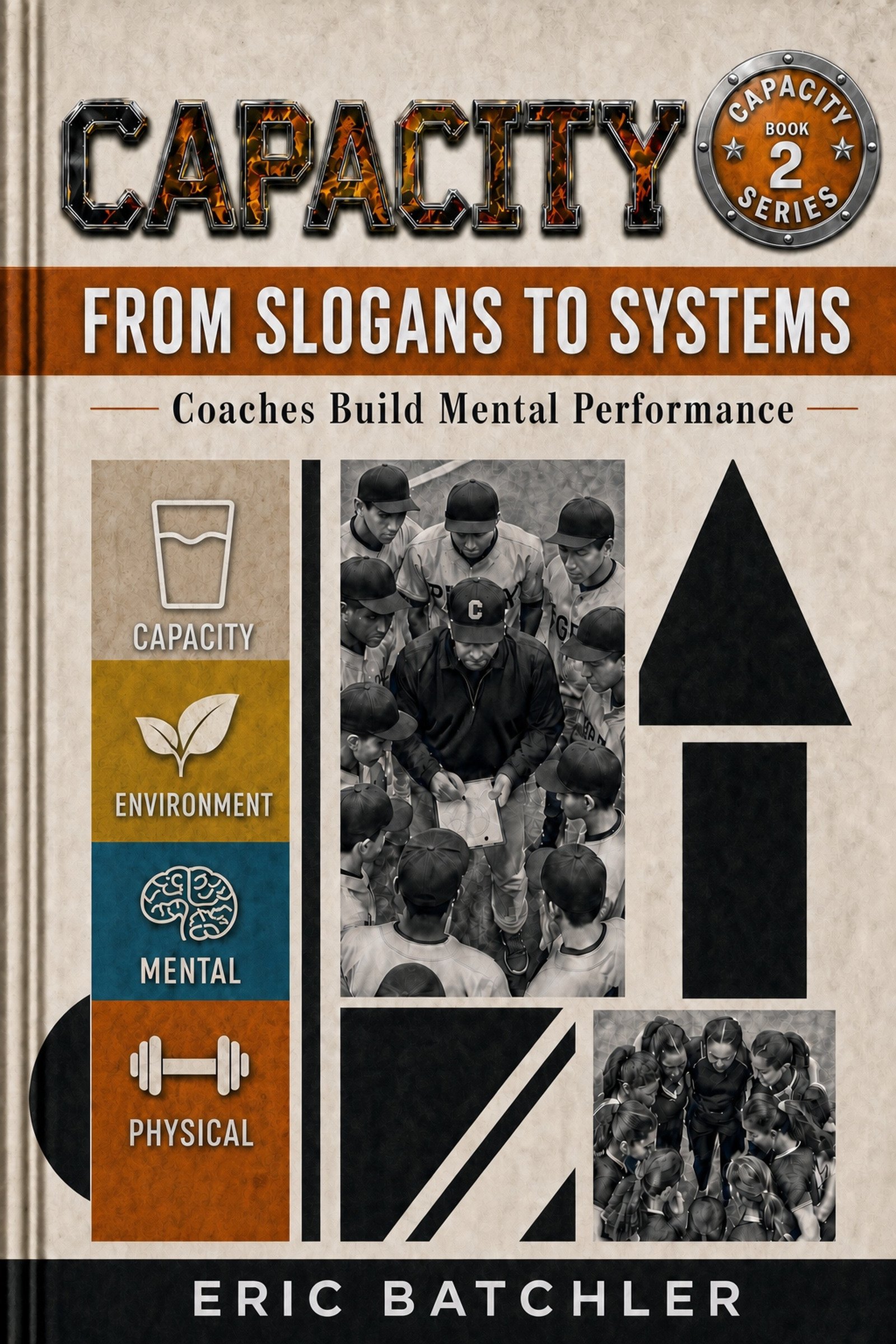
Book Two is written for the adults around the athlete — coaches and athletic directors building programs where mental performance is designed in, not bolted on. It introduces the ACCESS framework (Adaptation, Consent, Culture, Equity, Safety, Sustainability) for constrained sports environments, and makes the case that more reps won’t fix a full cup: if a program only builds skill without protecting capacity, athletes burn out no matter how talented they are. Practical, systems-level guidance replaces slogans with a repeatable structure coaches can actually run — turning “want it more” into a program that gives athletes room to perform.
Book Three: The Mental Performance Toolbox
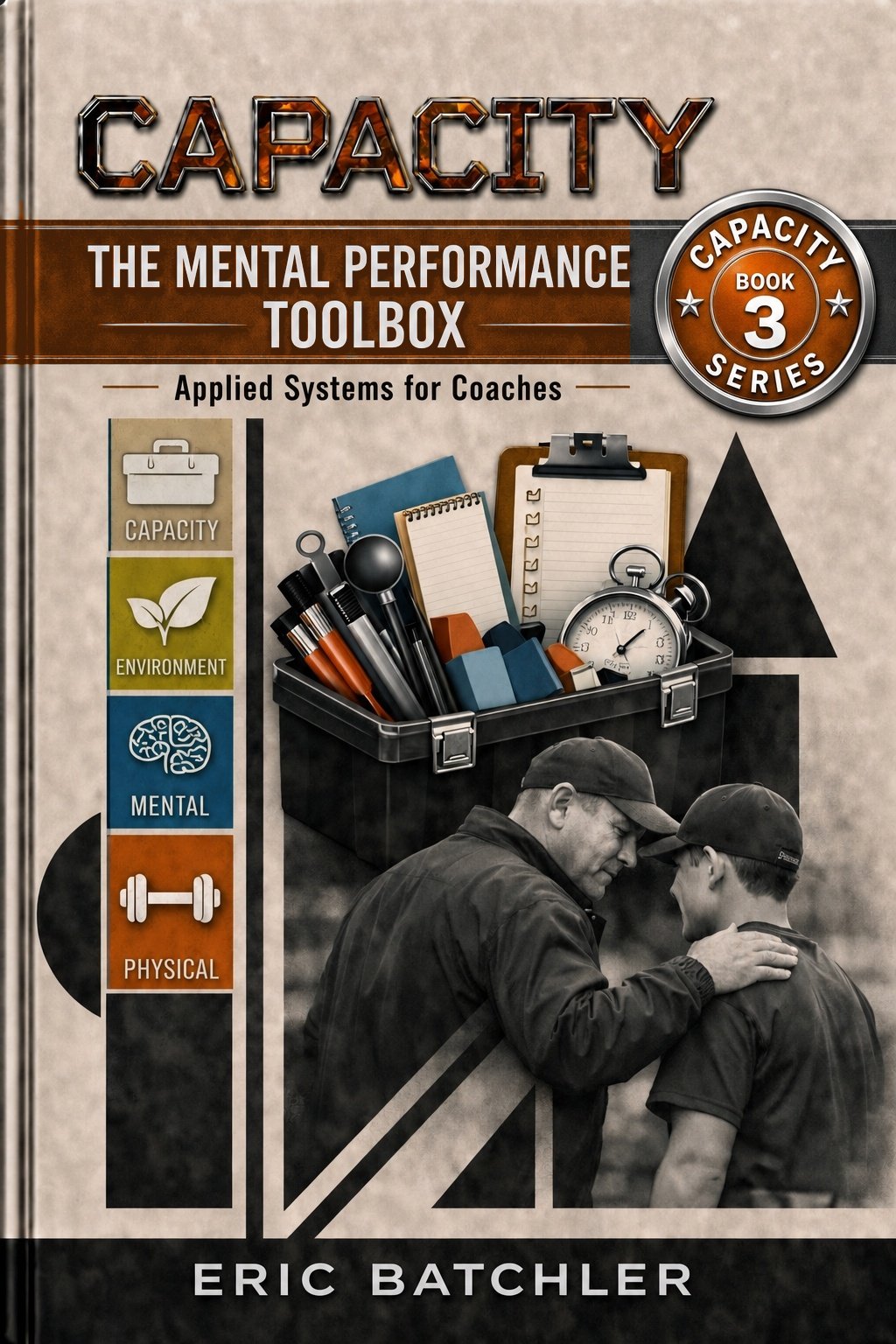
Book Three is an applied, systems-level toolbox for coaches who want to put the framework into daily practice. It expands the real-time tools — breathing, anchoring, visualization, factual self-talk, and self-scouting — into a full system coaches can run across a season, alongside guidance on fairness versus equal treatment, protecting playtime, and giving athletes real permission to fail without it costing them their confidence. Where Book One equips the athlete and Book Two equips the program, Book Three equips the coach with the day-to-day systems that make both work.
Book Four: ACCESS — A Framework for Ethical, High-Performance Coaching
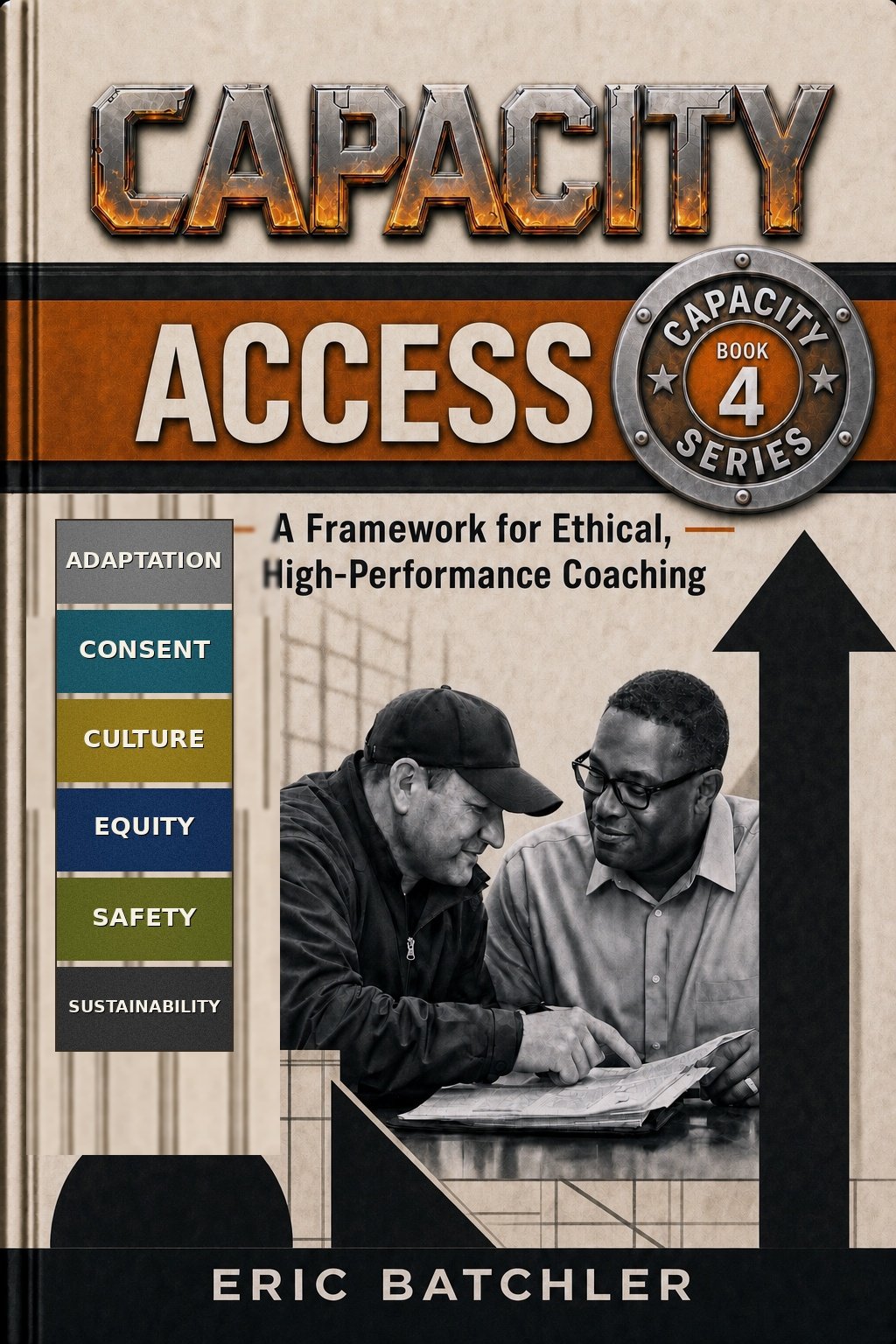
Book Four turns to the organizations and systems around the athlete. It names the controllables asymmetry at the heart of youth and school sport: the controllable factors that shape performance — scheduling, staffing, facilities, workload — too often get quietly reassigned to the athlete alone, who is asked to “want it more” instead. ACCESS (Adaptation, Consent, Culture, Equity, Safety, Sustainability) gives administrators and organizations a framework for taking responsibility for what is actually within their control, building programs that are ethical and high-performing at the same time, not one traded for the other.
Capacity Workbooks
The Capacity Workbooks are the companion piece to the books — hands-on, write-in tools built for repetition. Where the books explain the framework, the workbooks give athletes and coaches a structured place to practice it: tracking capacity day to day, running through the ARR sequence, and building the self-talk and self-scouting habits that turn a one-time read into a daily routine.
Workbook One: Capacity — Mental Performance Tools for Athletes
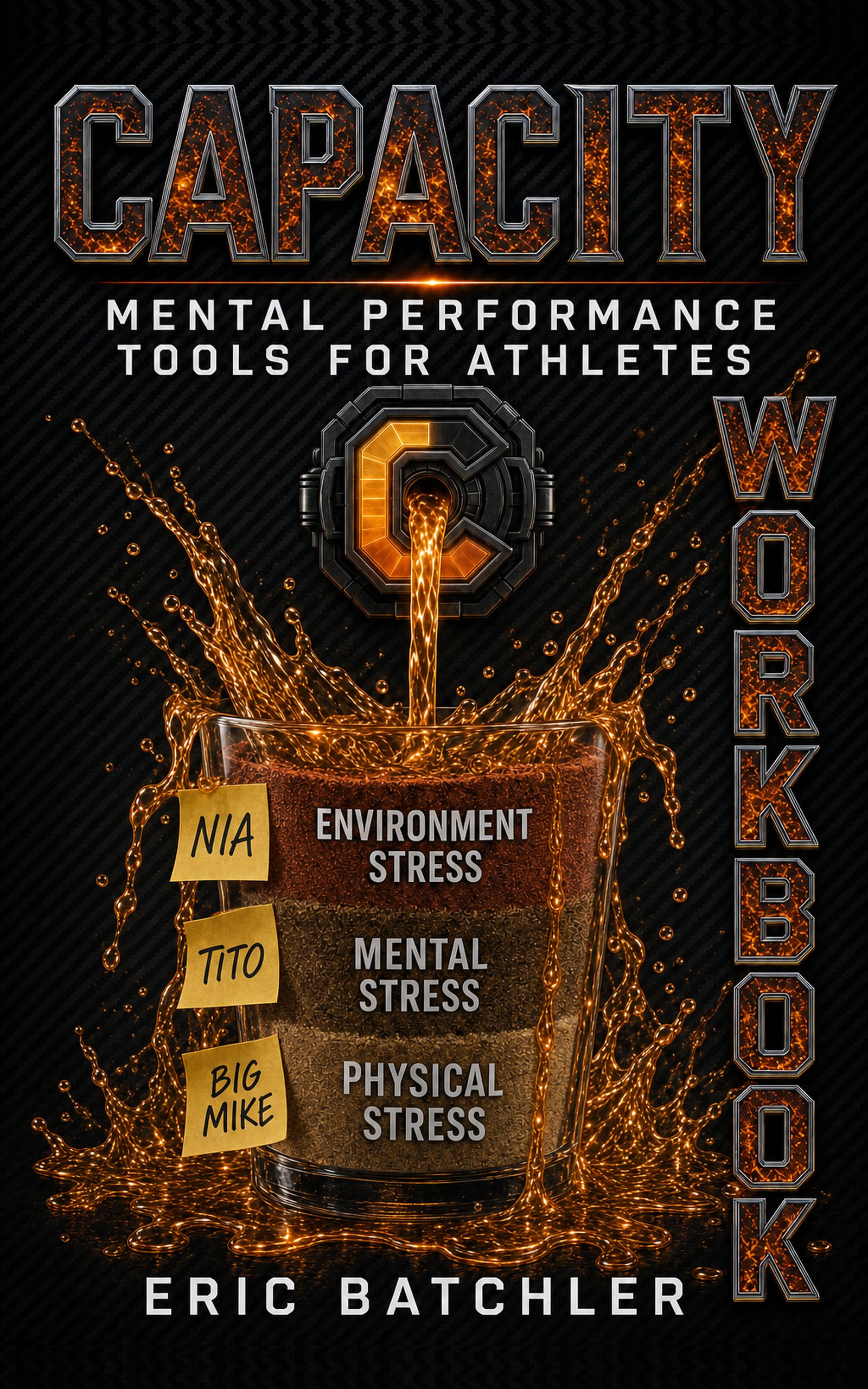
This workbook pairs directly with Book One. Each section mirrors a core tool from the book — capacity check-ins, ARR (Anchor, Reframe, Reset) practice pages, visualization and recovery scripts, and factual self-talk exercises — with guided prompts and write-in space so an athlete can build the habit, not just read about it. It’s designed to sit in a locker or a bag and get used before and after every practice or game.
Workbook Two: Capacity Companion Workbook — Tools, Forms and Templates for Coaches and Programs
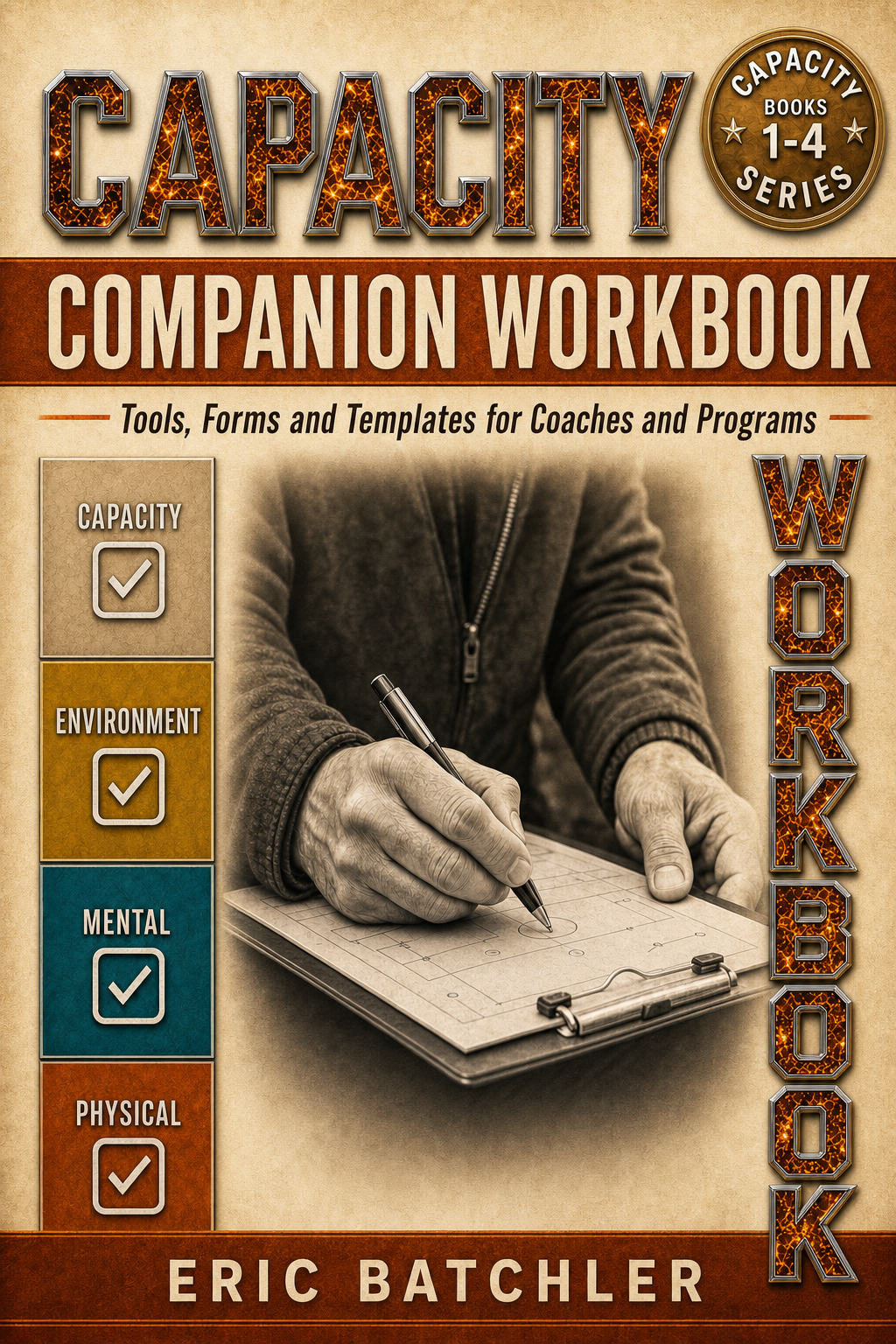
Built for coaches and program directors, this workbook turns Book Two’s ACCESS framework (Adaptation, Consent, Culture, Equity, Safety, Sustainability) into ready-to-use forms and templates — season planning worksheets, culture and communication checklists, and self-assessment tools for evaluating whether a program is actually protecting athletes’ capacity, not just demanding more from it. It’s built to be used at the whiteboard, in staff meetings, and across a season, not read once and shelved.
Sample the Series
Every published title in the Capacity series is available to preview before you buy. Use Amazon’s “Look Inside” feature on any book or workbook listing to read the opening pages, see the table of contents, and get a feel for the tools before committing — a quick way to check that a given title matches where you or your athletes are right now.
“As a player, coach, scout, and agent at all levels of baseball, ‘Capacity’ is a must-read for players looking to advance to the next level of their game. For coaches and parents, ‘Capacity’ gives you a tool to understand and enhance your players’ mental knowledge of any sport they play, helping them reach the next goal when they seem to have hit a dead end, and their performance has stalled. ‘Capacity’ is the total package for your mental advancement, not just in sports but in life.” -Coach Jim Hayes
From the Page to Practice
The Capacity framework isn’t just something to read — it’s something to build into how a team, program, or family actually operates day to day. Through one-on-one mental performance coaching and team or staff workshops, Eric works directly with athletes, coaches, and organizations to install these tools where they matter most: in practice, in games, and in the systems around them. If you’ve read the books and want help putting the framework into practice, coaching is the next step.
Frequently Asked Questions
What does “Capacity” actually mean?
“Capacity” is the idea that mental performance isn’t fixed — it’s more like a container that gets filled or drained by stress, fatigue, doubt, and pressure. When capacity is high, an athlete can absorb a bad call, a mistake, or a tough opponent and keep performing at their level. When it’s low, even small setbacks can snowball into a full performance collapse. The framework in the books gives athletes, coaches, and parents concrete tools — like the ARR sequence (Anchor, Reframe, Reset) — to protect and rebuild that capacity in real time, during the game itself, not just in theory.
Do I need to be a coach to use these tools?
Not at all. While Book Two and the Companion Workbook are built specifically for coaches and program directors, the core Capacity framework — the four-quadrant idea, the ARR sequence, factual self-talk — is written directly for athletes and families in Book One and its workbook. Parents use it to support their kids at home, athletes use it on their own between practices, and coaches use it to build it into team culture. You can start wherever fits your role and go from there.
What is ACCESS?
ACCESS is the framework at the center of Book Two, built specifically for coaches and program directors: Adaptation, Consent, Culture, Equity, Safety, and Sustainability. It’s a way of evaluating whether a program is actually protecting athletes’ capacity — mentally and physically — rather than just demanding more from it. The Capacity Companion Workbook turns each part of ACCESS into ready-to-use forms and self-assessment tools for staff meetings, season planning, and culture checks.
Do I need to read the books in order?
Not necessarily, but there is a logical path. Book One lays out the core Capacity framework and is the natural starting point for most readers — athletes, parents, and coaches alike. Book Two builds on that foundation with the ACCESS framework for programs and organizations, and Books Three and Four (coming soon) extend the series into new terrain. If you already know which audience you’re reading for — an individual athlete or a program — you can jump straight to the book built for that.
Ready to Explore Capacity?
Pick up the books, put the workbooks to work, and see where a Capacity Scorecard puts you right now. Or if you’re ready to build this into how your team or family operates day to day, reach out and let’s talk about coaching or a workshop for your program.